
Learning through play, discovery through touch
How do you teach ocean conservation to kids who can't read yet?
Young children are naturally curious about the ocean. They collect shells, chase crabs, and ask endless questions about what lives beneath the waves. But traditional educational tools—books, videos, exhibits—don't translate well to the beach itself.
The gap: There's a disconnect between where kids learn about the ocean (indoors, through screens) and where they actually experience it (outdoors, hands-on).
The opportunity: What if the beach itself could be the classroom? What if learning happened through building, storytelling, and discovery rather than instruction?
Sea Stories takes a co-operative approach to learning.
Parents and children work together to build sentences and stories using sand molds shaped like local sea creatures and word stamps. The physical act of constructing words and creatures in sand makes abstract concepts tangible and memorable, turning a beach day into an interactive ecology lesson.
By combining storytelling, tactile play, and local relevance (featuring BC-specific sealife), Sea Stories creates a learning experience that feels like play first—with education happening naturally along the way. Parents become guides rather than teachers, and children become explorers rather than students.
Research: The Vancouver Aquarium

Watching how kids really learn— A research trip to the Vancouver Aquarium revealed something crucial: kids don't just want to observe… they want to discover.
The way a child's face lights up when they find a tide pool creature or identify a starfish on their own is completely different from being told about it. There's magic in self-discovery that no exhibit can replicate.
Key insight:
Kids are most engaged when they feel like explorers, not students. They want to piece things together themselves, with parents as guides rather than teachers.
The Idea: Co-creating stories in the sand
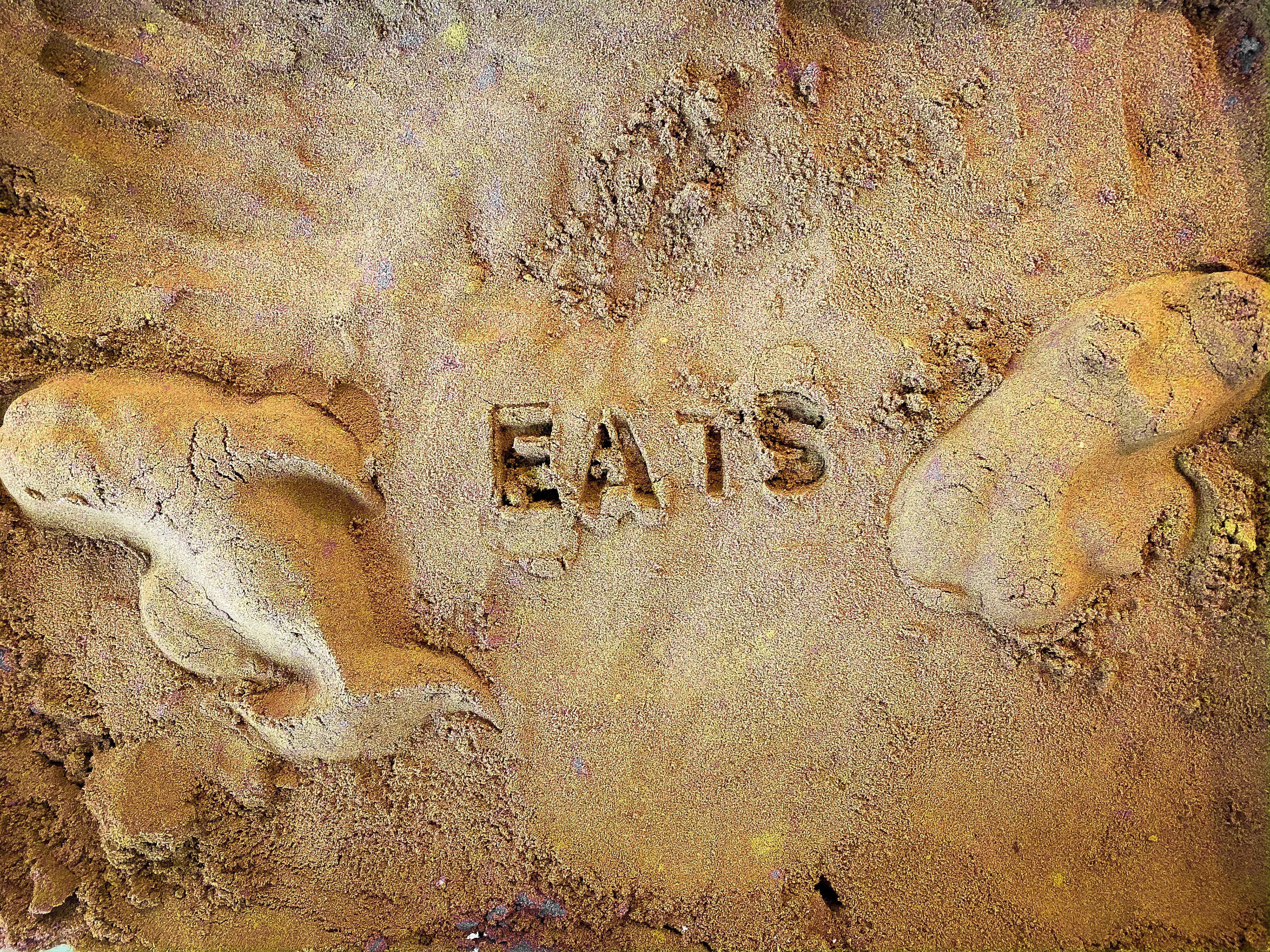
Sea Stories takes a co-operative approach to learning. Parents and children work together to build sentences and stories using sand molds shaped like local sea creatures and word stamps.
How it works:
Choose a sea creature mold (octopus, seal, orca, etc.)
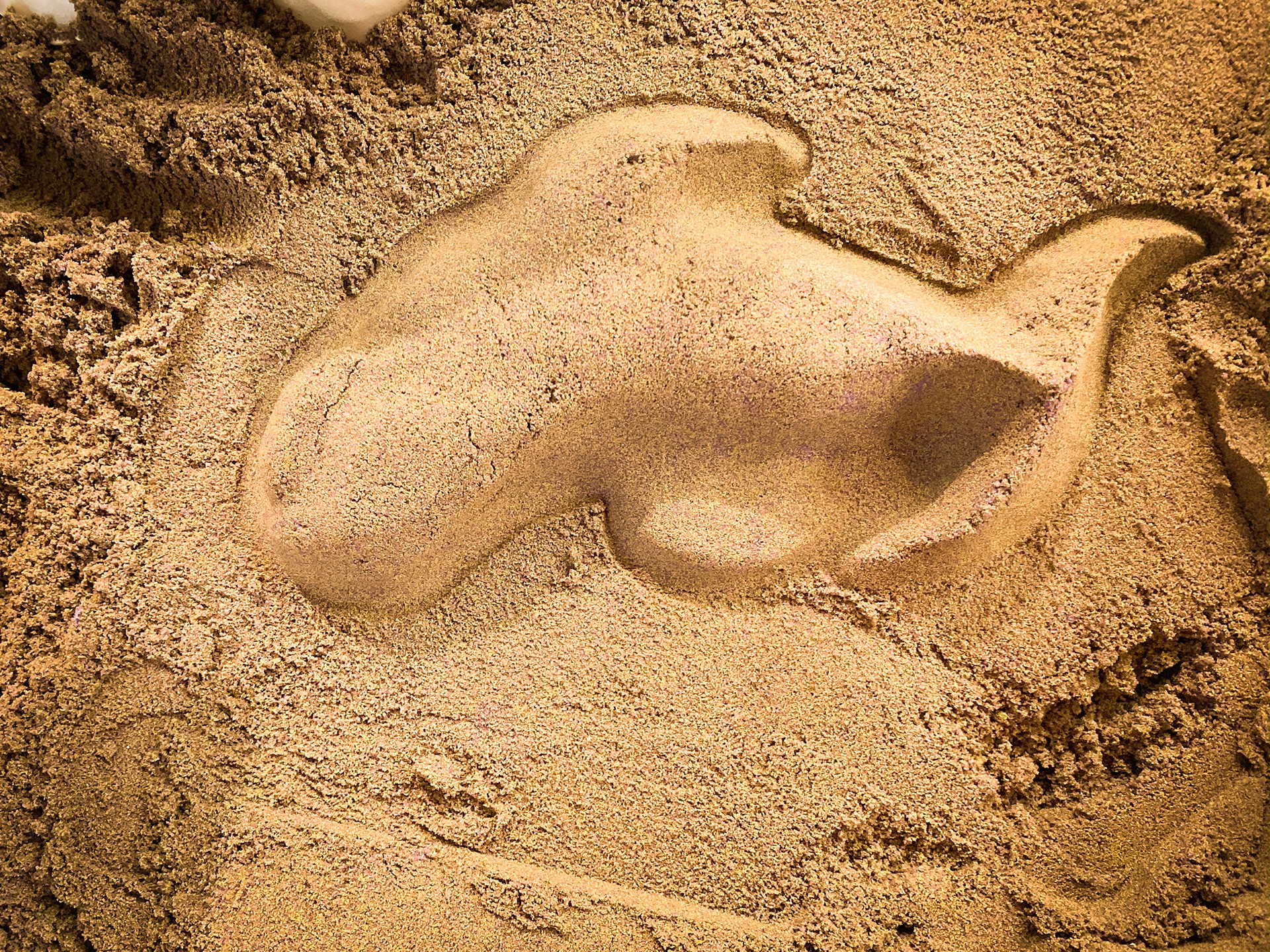
Press it into the sand to create an impression
Use word stamps to build sentences around the creature
Learn about the animal's life cycle through guided storytelling
Example story:
"The SEAL EATS fish" → "Baby seals GROW in the ocean" → "Adult seals DIVE deep underwater"
The physical act of building words and creatures in sand makes abstract concepts tangible and memorable.
Design Philosophy: Playfulness meets education

Sea Stories isn't a workbook disguised as a toy. It's designed to feel like play first, with learning happening naturally along the way.
Core principles:
Tactile learning: Sand molds engage multiple senses (touch, sight, movement)
Parent participation: Designed for collaboration, not solo play
Local relevance: Features BC-specific sealife that kids might actually encounter
Open-ended: No single "correct" way to play or learn
Beach-ready: Durable, easy to clean, works with wet or dry sand
The Sea Creature Molds: Local sealife, accurate anatomy
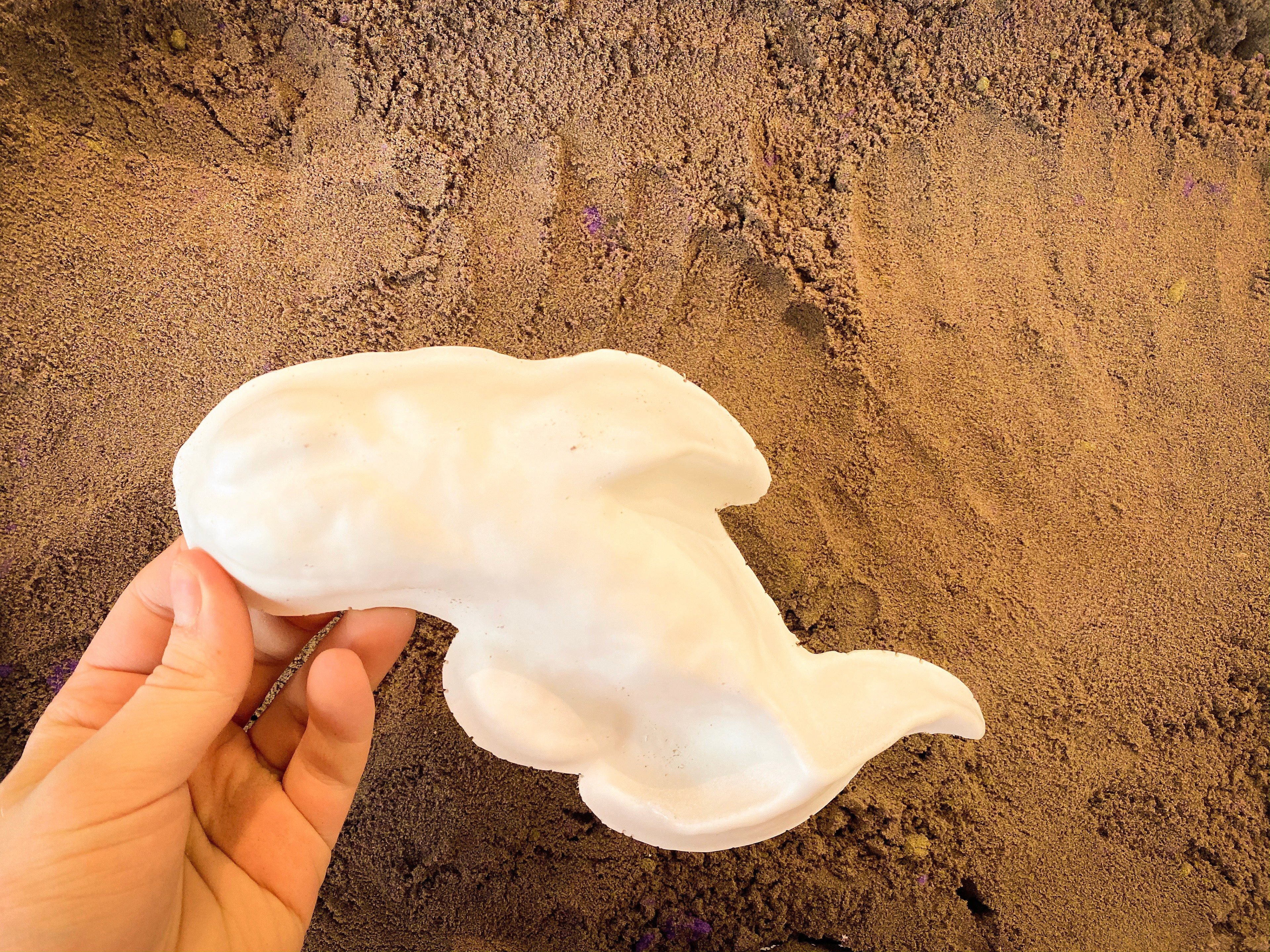
Each mold represents a real creature from BC's coastal waters.
Featured Species:
Orca (Killer Whale) - Apex predator, family pods
Harbor Seal - Coastal visitor, playful personality
Octopus - Intelligent, color-changing hunter
Starfish (Sea Star) - Tide pool favorite, regeneration abilities
Salmon - Life cycle migration, cultural significance
The molds are anatomically simplified but recognizable, striking a balance between realism and child-friendly design.
The Word Stamps: Building vocabulary through sentence construction

Word stamps let kids physically "write" in the sand, forming sentences about the creatures they've molded:
Action words: EATS, SWIMS, GROWS, DIVES, HUNTS
Descriptive words: BIG, FAST, COLORFUL, BABY, ADULT
Connecting words: THE, AND, IN, WITH
Why this works:
Kinesthetic learners benefit from physical word-building
Repeated stamping reinforces spelling and recognition
Parents can scaffold complexity based on the child's reading level
The Parent-Child Dynamic: Collaboration, not instruction
Sea Stories is designed to foster genuine parent-child collaboration. Unlike traditional educational toys where parents supervise or correct, this system requires both participants to build something together.
What makes it co-operative:
Parents don't have all the answers—some facts are discovered together
Children lead the creative direction (which creature, what story)
Shared physical activity (both stamping, molding, arranging)
Natural conversation starters built into the play pattern
Research insight: From our aquarium observations, we noticed that kids retain information better when they teach it back to their parents. Sea Stories creates opportunities for this role reversal.
Life Cycle Education: Understanding nature's rhythms
Beyond individual facts, Sea Stories introduces the concept of life cycles—birth, growth, reproduction, death—in an age-appropriate way.
Example progression:
Baby seal is born on land
Young seal learns to swim and hunt
Adult seal dives deep for fish
Old seal returns to the beach to rest
By building these stages in sequence with sand molds, children visualize the passage of time and natural cycles in a way that feels intuitive.
Prototype Development
From tinfoil to beach-ready molds
Sea Stories evolved through iterative material testing, with each prototype revealing new insights about durability, usability, and the realities of beach play.
Phase 1: Tinfoil Prototypes
The first molds were simple tinfoil forms, hand-pressed and tested directly at the beach with children. These quick, low-cost prototypes let us validate the core concept immediately: could kids actually create recognizable creatures in sand? The answer was yes—but the tinfoil crumpled after a few uses, and fine details were lost.
Key learning: The idea worked, but we needed materials that could withstand repeated stamping into wet, abrasive sand.
Phase 2: Clay Sculpting
I hand-sculpted each sea creature in clay, refining anatomical details to be recognizable yet simple enough for small hands to press cleanly. Each sculpture balanced scientific accuracy with child-friendly proportions—starfish arms needed to be thick enough to create clear impressions, seal whiskers had to be pronounced enough to show up in sand.
Phase 3: Vacuum Forming
The clay sculptures became masters for vacuum forming in durable plastic sheeting (likely PETG or ABS—rigid enough to hold shape, flexible enough not to crack). This process created lightweight, beach-ready molds that could be rinsed clean and used repeatedly.
Word Stamps: Wood and Blue Foam
Word stamps were crafted from wood bases with blue foam (dense insulation foam) letters attached. The foam compressed slightly when stamped, creating clean letter impressions without requiring excessive force. This combination was tactile, lightweight, and forgiving—kids could press firmly without worrying about breaking components.
Testing insights:
Wet sand held details better than dry sand
Curved mold edges (rather than sharp 90° angles) released from sand more cleanly
Handles on molds were unnecessary—kids preferred gripping the entire shape
Parents naturally guided without over-correcting, validating the collaborative design intent
Impact & Learning Outcomes
Designing for discovery, not instruction
Sea Stories was built on a central belief: environmental education works best when it doesn't feel like education at all. By placing learning tools directly in the context where curiosity naturally occurs—the beach—the design aimed to transform casual play into ecological understanding.
Intended outcomes:
Vocabulary development: Children would encounter and use ocean-related terms (habitat, predator, lifecycle) through repeated stamping and storytelling, building language skills alongside ecological knowledge
Pattern recognition: By constructing multiple stories about different creatures, kids would begin to notice similarities across species—all animals eat, grow, reproduce, adapt
Spatial and motor skills: The physical act of pressing molds and stamps develops fine motor control and spatial reasoning as children learn to arrange elements into coherent narratives
Parent-child bonding: Shared discovery creates stronger memories than passive instruction, with parents learning alongside their children rather than lecturing
What I learned as a designer:
This project taught me that context is everything. A sand mold isn't revolutionary—but a sand mold at the beach, where kids can immediately compare their molded octopus to real tide pool creatures, transforms a toy into a teaching moment. The design's power came from reducing friction between curiosity and discovery.
I also learned about designing for diverse engagement styles. Some children would methodically build complete sentences; others would create creature zoos with minimal text. Both approaches were valid. The open-ended structure accommodated different learning paces and interests without making anyone feel they were "doing it wrong."
The bigger picture:
Sea Stories reinforced my belief that good educational design amplifies existing curiosity rather than manufacturing it. Kids already want to understand the ocean—they just need tools that meet them where they are, literally and developmentally. By making the learning process tactile, collaborative, and place-based, the design turned abstract concepts (life cycles, ecosystems, conservation) into something children could touch, build, and remember.
If successful, Sea Stories wouldn't just teach facts about seals and starfish. It would teach a way of thinking: that the natural world is knowable, that questions have discoverable answers, and that learning can happen anywhere—especially where you least expect a classroom to be.
Reflection
The magic of discovery
This project reinforced my belief that the best educational tools don't feel like teaching. They feel like play, adventure, and discovery.
What I learned:
Context matters—learning about the ocean at the ocean is infinitely more powerful
Kids are smarter than we give them credit for—they can handle complex concepts when presented tangibly
Parents want to engage with their children, but they need tools that make it easy and natural
The best designs disappear—kids focus on the experience, not the product
If I continued this project, I would:
Develop expansion packs for different ecosystems (tidal, deep ocean, kelp forests)
Create a guidebook with storytelling prompts for parents
Partner with aquariums or conservation organizations
Test in real beach environments with diverse age groups